Anrok and Sphere are both automated sales tax solutions, but they serve different audiences. Anrok has more native integrations, while Sphere's proprietary TRAM aims to simplify global compliance. Learn more about both services and see which is best for you.



Anrok and Sphere are seen as comparable tax solutions because both are digital-first compliance products designed primarily for the SaaS market. However, the products differ in key ways, including industry longevity, pricing structure, and global reach.
Anrok stands out for its more native integrations, and its Custom plan includes features enterprise organizations want, including SSO, e-invoicing, multi-entity management, and audit-ready reporting. Anrok also provides automated support across over 150 countries.
Sphere may be a better fit for those seeking stronger customer support, as the company promises a 24/7 Slack channel and a dedicated account manager for Growth plan customers.
While Sphere serves only 130+ countries compared to Anrok's 150, its proprietary Tax Review and Assessment Model (TRAM) is an innovative AI solution for researching global indirect tax obligations that helps it stand apart.
This guide provides insight into the features, functionality, and pricing of each service so you can decide which is best for you. We’ll also talk about where both fall short and cover lighter-weight alternatives that may be a better fit for ecommerce companies.
If you are deciding between Anrok and Sphere, the table below provides an overview of key features of each service:
Sphere and Anrok have many similarities, although Anrok is more established and serves more countries.
However, Sphere's TRAM and AI-native focus may appeal to companies that want a compliance solution that harnesses AI research tools to provide constant, comprehensive automated monitoring of regulatory shifts.
[inline-cta title="Let us worry about sales tax." text="The trusted solution for U.S. sales tax, VAT, and GST compliance, used by 3,000+ global businesses. " button="Get started for free" button-link="/get-started"]
Both Anrok and Sphere charge a monthly subscription fee by region rather than by specific compliance task.
However, the cost structures vary, so the most affordable option may differ based on business size, number of registrations, and filing volume.
Anrok offers two tiers of service:
Anrok notes that sellers on the Starter plan with high transaction volumes may be subject to additional fees to cover third-party costs that Anrok incurs.
Sphere also offers two service tiers, but the number of regions can determine which tier you are in, although you also have the option to move up to Growth sooner:
Like Anrok, Sphere charges more at high volume: a flat per-transaction fee once you pass 50,000 transactions. Sphere also passes along any registration fees a jurisdiction charges.
Key differences between the two include:
Nexus means you have sufficient connections within a state that you must collect sales tax on their behalf.
For SaaS companies, this is harder to track than it sounds. Subscription renewals and usage-based billing can push you past a state's threshold mid-year, even if nothing about how you sell has changed.
You could establish economic nexus or physical nexus, with economic nexus determined by volume or number of transactions and physical nexus by a physical presence, such as storing goods or having a local storefront.
Both Anrok and Sphere offer tracking for both types of nexus. Monitoring for economic nexus requires tracking sales in each state across all storefronts and billing platforms, while monitoring for physical nexus can require integrations with inventory-management or HR tools.
Both Anrok and Sphere also include nexus monitoring in their Starter and Custom/Growth services. However, there are some critical differences:
Both companies also monitor for regulatory changes that could affect nexus. For example, California recently passed SB 122 that makes most forms of SaaS taxable starting Jan. 1, 2027.
Once you trigger nexus in any state, you must register with its revenue department and begin collecting, filing, and remitting taxes.
Both Anrok and Sphere can register on your behalf, and registration is included as part of your service. Each new region or market where you register adds to your monthly costs. However, there are some important differences between the two:
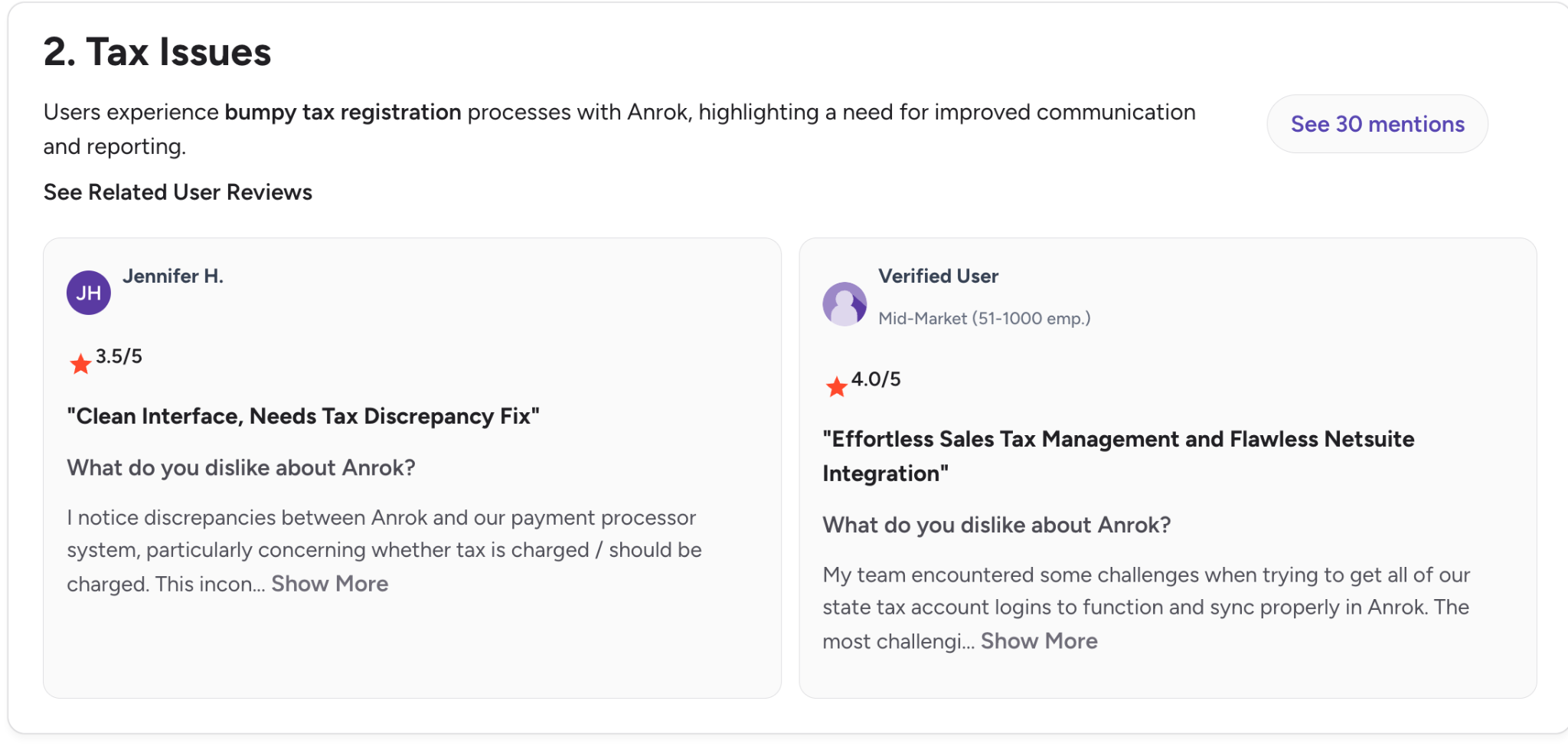
The following is a description of common complaints about Anrok:
And here is a summary of reviews of Sphere:
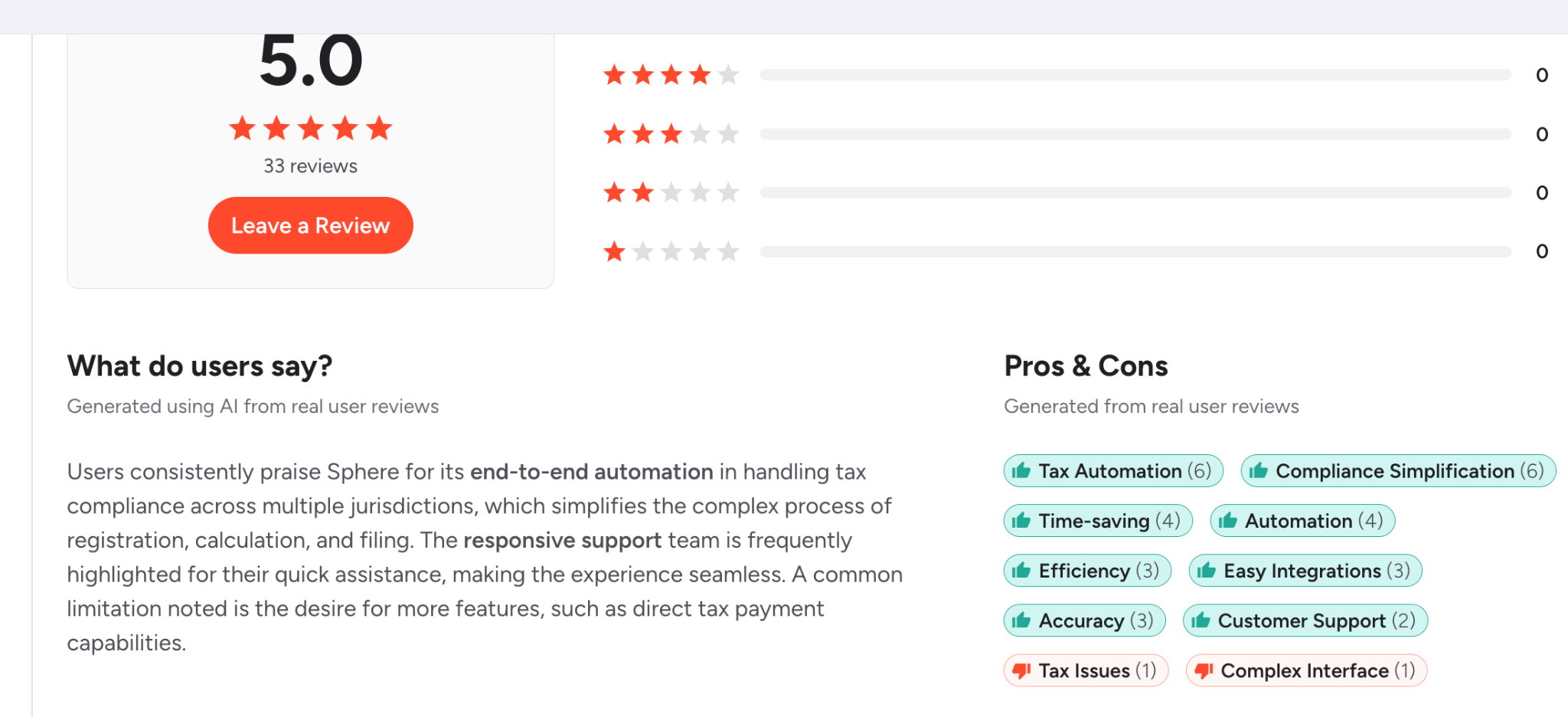
When it comes to support, both companies are generally praised for responsiveness. However, Sphere stands out because it offers 24/7 Slack support and a dedicated account manager for Growth plan users.
Anrok and Sphere both have their own strengths and weaknesses. Here's how to decide which of the two is right for you:
Anrok is a top choice for:
Sphere is a top choice for:
You should explore both options carefully to see which is a better fit.
[inline-cta title="Let us worry about sales tax." text="The trusted solution for U.S. sales tax, VAT, and GST compliance, used by 3,000+ global businesses. " button="Get started for free" button-link="/get-started"]
Both Sphere and Anrok have some areas where they fall short, including:
Numeral is an alternative to Anrok and Sphere that fills many of the gaps that these two services leave.
You can get started or book a demo with Numeral today to see how our service works for you.
[inline-cta title="Let us worry about sales tax." text="The trusted solution for U.S. sales tax, VAT, and GST compliance, used by 3,000+ global businesses. " button="Get started for free" button-link="/get-started"]
Still need to know more? Here are the answers to some frequently asked questions about Anrok vs. Sphere.
Anrok has a longer history of providing sales tax support and has more integrations to make operations easier. Sphere is a modern alternative with an AI-first approach and a unique compliance tool that helps monitor regulatory changes worldwide.
Sphere costs $100 per region per month for under 10 regions. For customers with 10 or more regions who switch to the Growth tier, pricing is customized. There are no per-filing fees on either the Starter or Growth tier.
Anrok costs $100 per market per month. For more advanced services, including e-invoicing, custom pricing is available.
There are numerous differences between Anrok and Sphere:
Both services lack certain key features provided by competitors like Numeral. For example, neither service offers an on-time filing guarantee, which Numeral provides for peace of mind.
Sphere was founded in 2021 but did not launch from stealth until late 2024. It has a shorter history and fewer independent reviews than more established competitors. However, the reviews it does have are strongly positive.
Neither Sphere nor Anrok charges a per-filing fee. Both charge monthly per region/market, which means you pay for monthly service even if no filing is required during that time period.
Still not sure what's best for you? Check out some of our other comparisons:
[inline-cta title="Let us worry about sales tax." text="The trusted solution for U.S. sales tax, VAT, and GST compliance, used by 3,000+ global businesses. " button="Get started for free" button-link="/get-started"]
The trusted solution for U.S. sales tax, VAT, and GST compliance, used by 3,500+ global businesses.