Dropshipping is an online retail model in which a retailer doesn't stock or ship products. Instead, when a customer orders an item, the retailer purchases it from a third-party supplier, who then ships it directly to the customer.


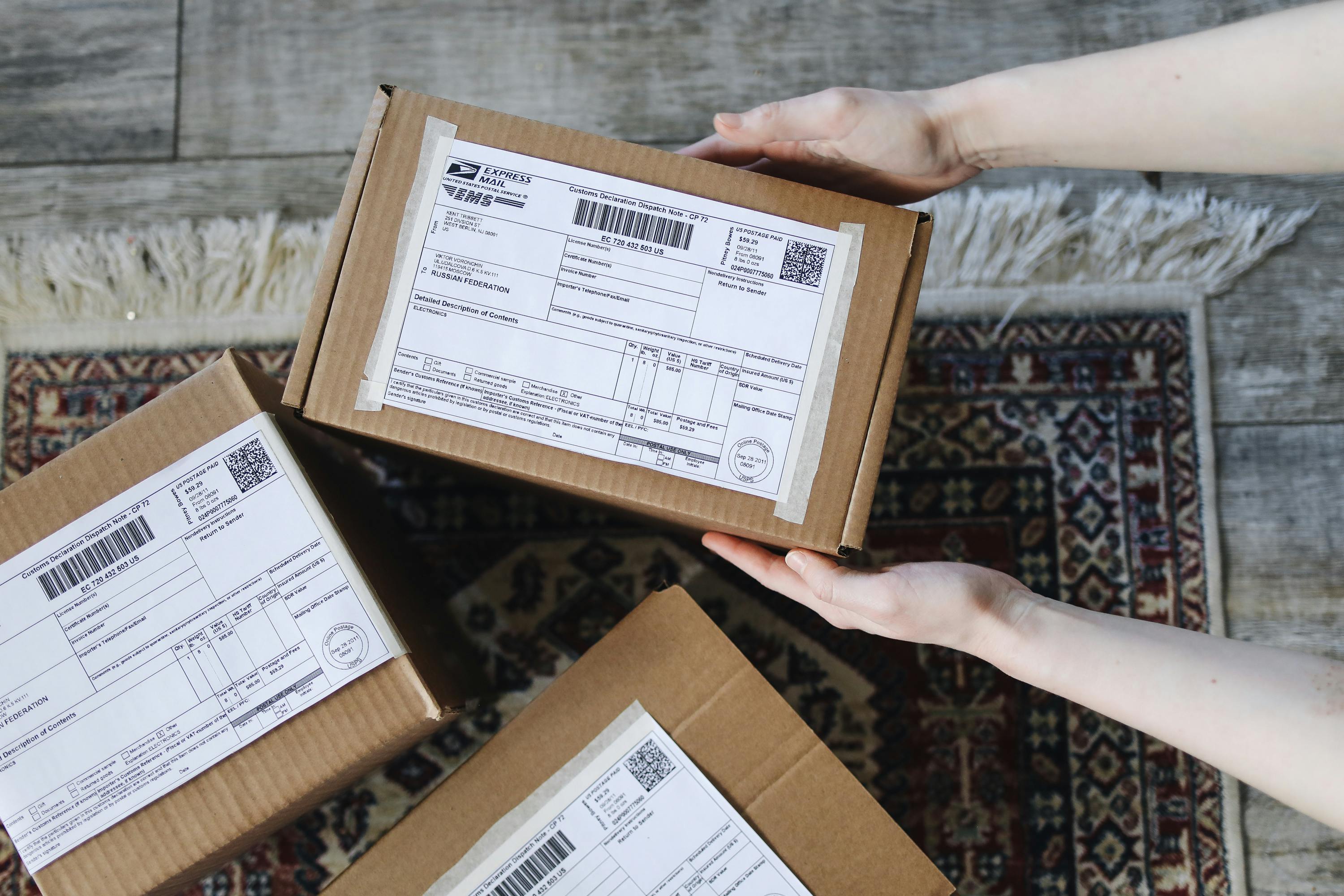
Dropshipping is becoming increasingly popular, with businesses generating more than $276 billion with this model in 2023.
For ecommerce businesses that dropship, determining where the responsibility for tax collection lies can be complicated, and it depends on multiple questions, such as:
In this guide, we’ll be answering these questions, walking you through common issues and how to deal with them, sharing valuable resources and best practices, and more.
Dropshipping gives retailers a way to sell products without the hassle of maintaining a physical inventory. A typical dropshipping transaction involves the following steps:
Simple, right? But there’s a complex question embedded in that process. Who’s responsible for collecting and remitting state sales tax? In a typical retail setting, like a shopping mall, it’s always the retailer’s responsibility. But when a third party enters the transaction and ships customers’ orders, the question gets more complicated.
In a dropshipping sale, whether the retailer or supplier collects sales tax depends on whether they have nexus in their customer’s state. If the retailer has nexus in a particular state, they’ll usually need to collect sales tax when they sell products to customers living there. And in certain situations, the sales tax may become the supplier’s responsibility. But that’s not always the case.
Let’s look at the issue of nexus in more detail, and how the retailer, supplier, and customer each factor into the sales tax equation.
For most dropshipping transactions, the retailer handles the collection and remittance of sales tax from the end customer if they have nexus in that customer’s jurisdiction.
There are two primary types of nexus to be mindful of.
Economic nexus depends on how much business a company does in a particular location each year. States set their own thresholds for economic nexus. For instance, Alabama’s annual threshold is $250,000, while California’s is $500,000.
But the most common is 200 individual sales or $100,000 in annual transactions. If you have physical or economic nexus in a particular state, you’ll need to collect and remit state sales tax on transactions with customers living there.
>> Read More: Wholesale Sales Tax: Who Pays?
As we mentioned earlier, the retailer handles the collection and remittance of sales tax from the end customer. However, doing so becomes the supplier's obligation in the following scenario:
In the event that the supplier has nexus in the same state as the retailer — the supplier’s customer — they’ll need to collect sales tax from the retailer. The supplier won’t have to collect sales tax from the retailer if the retailer has an exemption certificate, for example, a resale certificate, or another type of certificate that exempts nonprofits and some other companies from collecting sales tax.
A resale certificate typically states that the supplier doesn’t need to collect state sales tax from the retailer because the item is being resold, and the retailer will collect sales tax on the final sale.
Usually, customers are not obligated to remit sales taxes directly to tax authorities. Vendors must collect sales taxes and then remit them. But the end customer is still part of the equation.
If sales tax wasn’t collected when the customer made the purchase, they’ll need to pay what’s known as a use tax on that item when they file their state taxes.
Most consumers aren’t aware of this, and sometimes it’s not enforced very aggressively. However, this is changing, and enforcement around online purchases has been growing in recent years.
These are some of the main factors that can complicate the question of when to collect sales tax on dropshipping sales:
Clearly, that’s a lot to manage, and businesses can be hit with substantial sales tax compliance penalties if something goes wrong, either at home or abroad. If you’re starting to feel overwhelmed, don’t worry. Ecommerce sellers and suppliers can leverage sales tax compliance tools to streamline this vital part of their business. Here are a few of the most popular sales tax tools for ecommerce sellers.
With so many moving pieces, businesses need to manage dropshipping sales tax with care and precision. Retailers can benefit from using software to automate the collection and remittance of sales tax at appropriate times, furnish resale certificates or exemption certificates as needed, and handle other essential tax-related workflows during transactions.
For retailers and suppliers using Shopify and WooCommerce, the platforms offer a useful jumping-off point for sales tax management. For instance, Shopify can calculate and collect the correct amount of sales tax you should charge based on your customer’s address. However, users are still required to manually handle resale certificates, exemption certificates, and other non-basic tax issues. Many sellers opt to use a Shopify sales tax app alongside Shopify’s tax engine.
It's similar to WooCommerce's sales tax capabilities too. They can calculate and collect sales tax, but don't handle many aspects of the process required to stay compliant.
For businesses looking to automate sales tax management entirely, a software tool like Numeral could do the trick. Numeral uses AI to simplify ecommerce sales tax for retailers and suppliers. Simply connect your Shopify, Amazon, or other stores, and Numeral can help you with:
[inline-cta title="Let us worry about sales tax." text="The trusted solution for U.S. sales tax, VAT, and GST compliance, used by 3,500+ global businesses. " button="Get started for free" button-link="/get-started"]
In most dropshipping scenarios, the responsibility for sales tax lies with the retailer. However, exceptions to that rule are common, and both sellers and dropshippers can face stiff compliance penalties — and run the risk of double taxation — if they fail to understand their respective obligations.
Numeral can help you transform sales tax collection from a stressful and confusing issue into an automated process you barely need to think about.
The trusted solution for U.S. sales tax, VAT, and GST compliance, used by 3,500+ global businesses.