Washington's economic nexus threshold is $100,000 in sales. Get a free nexus study. All 50 states covered.
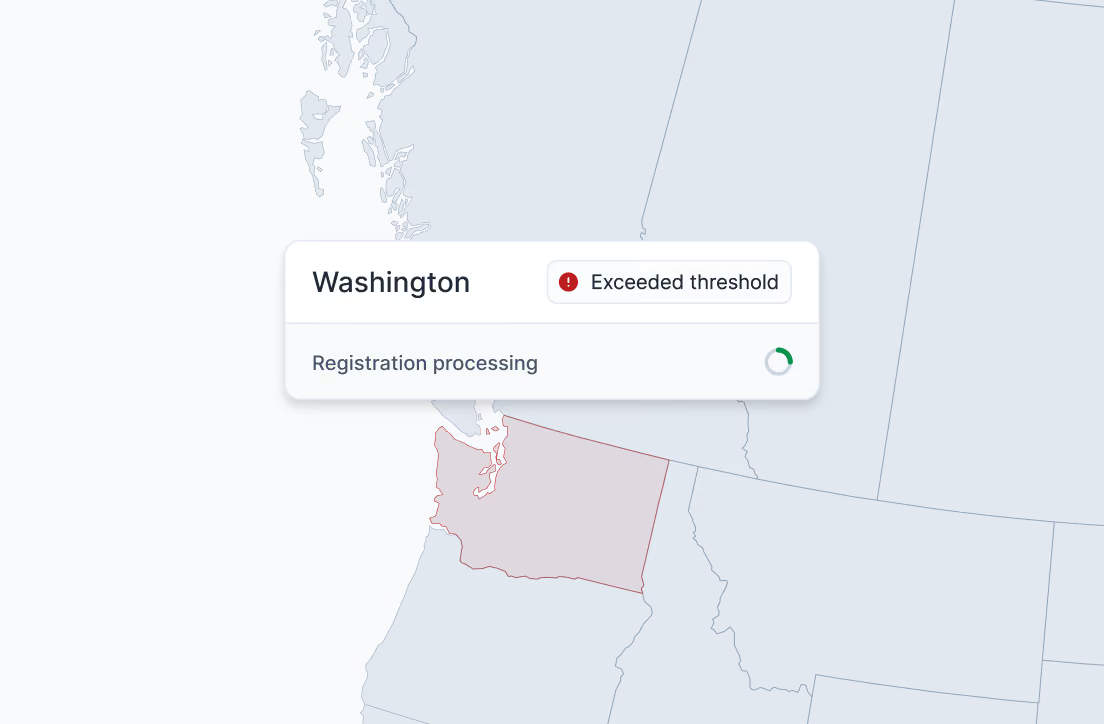
Washington does not use click-through or affiliate nexus as a standalone nexus trigger. Washington's click-through and affiliate nexus provisions were fully eliminated on March 14, 2019 via SSB 5581, the same legislation that repealed the 200-transaction prong.
Washington applies a "more than the slightest presence" standard to physical nexus determinations. Nexus is established by any employee working in Washington, inventory stored in the state (including stock held by a marketplace facilitator or third-party representative on the business's behalf), ownership or use of real or tangible personal property, own-vehicle deliveries into Washington, or an agent performing activities significantly associated with maintaining a Washington market.
A single trade convention per calendar year does not create nexus, unless the business makes sales, takes orders, or attends events open to the general public at that event.
Washington has a formally codified one-year trailing nexus rule under RCW 82.04.067 and RCW 82.04.220. Under DOR Special Notice SN 17, a business has nexus with Washington for a calendar year if it meets an applicable nexus standard during that calendar year, or if it met one in the immediately preceding calendar year. This rule applies to all excise taxes reported on Washington's combined excise tax return, including both retail sales tax and B&O tax. A business that establishes nexus in Year 1 therefore remains subject to Washington tax obligations through December 31 of Year 2, even if no nexus-creating activity occurs during Year 2.
Lorem ipsum dolor sit amet, consectetur adipiscing elit. Suspendisse varius enim in eros elementum tristique. Duis cursus, mi quis viverra ornare, eros dolor interdum nulla, ut commodo diam libero vitae erat. Aenean faucibus nibh et justo cursus id rutrum lorem imperdiet. Nunc ut sem vitae risus tristique posuere.

