Virginia's economic nexus threshold is $100,000 in sales or 200 transactions. Get a free nexus study. All 50 states covered.
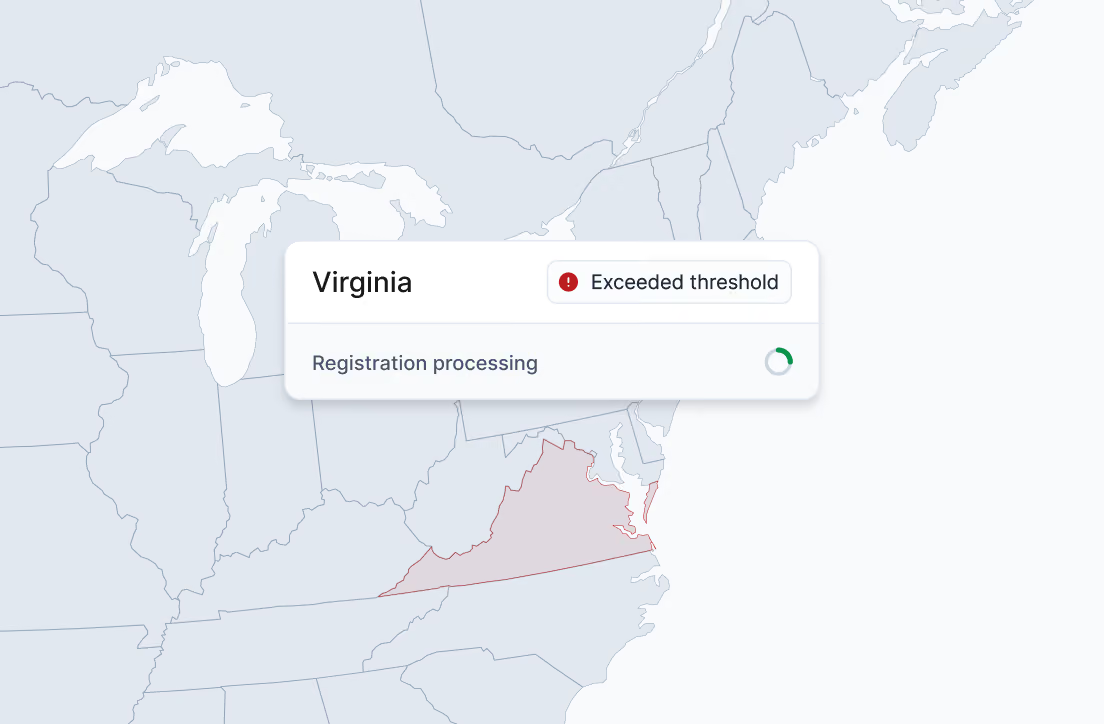
Virginia codified a rebuttable presumption of nexus effective September 1, 2013, pursuant to 2012 SB 597. Under that provision, an out-of-state dealer is presumed to have nexus in Virginia when a commonly controlled person within the same IRC § 1563(a) corporate group maintains a distribution center, warehouse, fulfillment center, office, or similar location in Virginia that facilitates delivery of the dealer's products to Virginia customers.
The presumption is rebuttable. A dealer may overcome it by demonstrating that the affiliate's Virginia activities are not significantly associated with the dealer's ability to establish or maintain a market in the Commonwealth. The statute does not define a specific evidentiary standard for rebuttal, leaving the determination to the facts and circumstances of the relationship between the affiliated entities.
Virginia has no standalone click-through nexus statute. The affiliate nexus provision under § 58.1-612 is the sole basis for nexus arising from relationships with in-state third parties.
Under Va. Code § 58.1-612, the following activities each independently establish nexus for an out-of-state dealer. Maintaining an office, warehouse, or any place of business in Virginia, whether directly, through an agent, or through a subsidiary, creates nexus. Having employees, independent contractors, or agents soliciting sales in Virginia similarly triggers the dealer definition.
Physical presence is also established through regular deliveries into Virginia using company-owned or company-operated vehicles more than 12 times per calendar year. Deliveries made exclusively by common carrier, USPS, UPS, or FedEx do not count toward this threshold and do not independently create nexus.
Two additional nexus-creating relationships are codified under § 58.1-612: ownership or control by the same interests that own or control a Virginia-based dealer, and operating as a franchisee or licensee under the same trade name as a Virginia-registered dealer, where the franchisee or licensee holds a Virginia registration. Systematic advertising broadcast from a Virginia transmitter or distributed from a Virginia location also creates nexus independently.
For sellers using third-party fulfillment, if a commonly controlled entity stores inventory in a Virginia fulfillment center, that arrangement triggers the rebuttable presumption under the affiliate nexus rules rather than a direct physical nexus determination. Maintaining a website hosted on a Virginia server does not independently create nexus under § 58.1-612.
Virginia has no published trailing nexus policy for physical presence. For economic nexus, a seller's collection obligation lapses on January 1 of the year following a full calendar year in which it failed to meet both the revenue and transaction thresholds simultaneously. Virginia's audit lookback period is up to 3 years for registered filers and up to 6 years for non-filers.
Lorem ipsum dolor sit amet, consectetur adipiscing elit. Suspendisse varius enim in eros elementum tristique. Duis cursus, mi quis viverra ornare, eros dolor interdum nulla, ut commodo diam libero vitae erat. Aenean faucibus nibh et justo cursus id rutrum lorem imperdiet. Nunc ut sem vitae risus tristique posuere.

