Vermont's economic nexus threshold is $100,000 in sales or 200 transactions. Get a free nexus study. All 50 states covered.
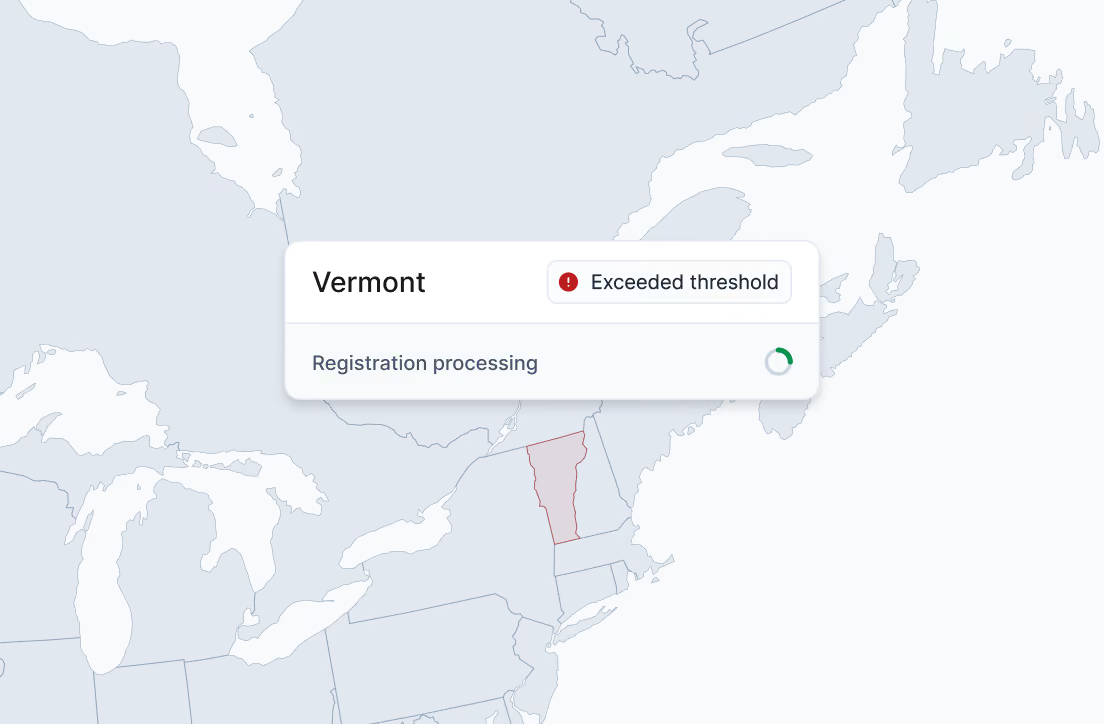
Vermont's affiliate nexus provisions are codified under 32 V.S.A. § 9701(9). A remote seller has nexus in Vermont when it owns or controls a person engaged in the same or similar line of business in Vermont, or when it maintains a franchisee or licensee operating under the seller's name in Vermont. An affiliated person is defined as any party with an ownership interest of more than 5%.
Vermont also established click-through nexus effective December 1, 2015. A rebuttable presumption of nexus arises when a remote seller enters into a referral agreement with a Vermont resident who refers customers for a commission, and the seller makes $10,000 or more in taxable Vermont sales in the preceding tax year. This presumption can be rebutted by demonstrating that the Vermont resident's activities did not constitute constitutionally sufficient solicitation.
Vermont's physical nexus rules are set out under 32 V.S.A. § 9701(9). Physical nexus arises from maintaining a place of business in Vermont, which includes an office, warehouse, storefront, or similar location. Nexus is also created by soliciting sales in Vermont through employees, independent contractors, agents, or other representatives.
Owning or leasing inventory stored in a Vermont warehouse creates nexus, and Vermont provides no FBA safe harbor for inventory held through third-party fulfillment arrangements.
Vermont applies one of the strictest trade show nexus standards in the country. Under Vermont's position, a seller retains physical nexus even if its only Vermont presence is attending a trade show or event in the state, regardless of whether the seller is an exhibitor and regardless of whether any sales are solicited.
By contrast, merely owning data or code, or using servers or web hosting services located in Vermont, does not on its own constitute physical nexus under Vermont law.
For economic nexus, if a seller's sales decrease below both the $100,000 and 200-transaction thresholds, the obligation to collect Vermont sales tax ceases. Any tax collected after nexus ceases must still be remitted to the state. For physical nexus, Vermont has not published a specific statutory trailing period.
Lorem ipsum dolor sit amet, consectetur adipiscing elit. Suspendisse varius enim in eros elementum tristique. Duis cursus, mi quis viverra ornare, eros dolor interdum nulla, ut commodo diam libero vitae erat. Aenean faucibus nibh et justo cursus id rutrum lorem imperdiet. Nunc ut sem vitae risus tristique posuere.

