Texas's economic nexus threshold is $500,000 in sales. Get a free nexus study. All 50 states covered.
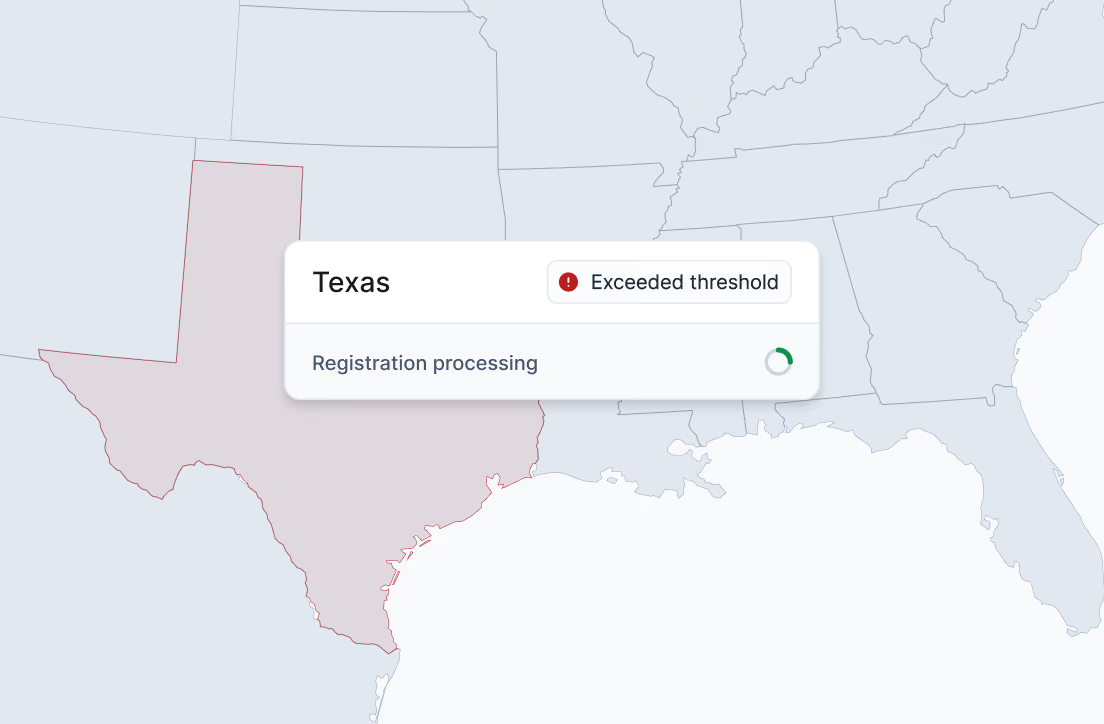
Texas establishes affiliate nexus through an ownership-based standard under Texas Tax Code § 151.107(b), effective January 1, 2012. Nexus is triggered when an out-of-state retailer holds at least 50% ownership in a Texas entity, or is 50% owned by a Texas entity, and that Texas entity performs any of the following activities: maintains a distribution center, warehouse, or similar facility in Texas that delivers the retailer's goods; maintains a Texas business location selling substantially similar products under substantially the same business name; uses Texas facilities or employees to advertise, promote, or facilitate the retailer's sales; or accepts returns in Texas for the retailer's goods.
Texas does not have click-through nexus and explicitly declined to adopt a commission-referral model.
Under Texas Tax Code § 151.107, being "engaged in business" in Texas creates nexus and encompasses a broad set of activities and presences. Any office, place of distribution, sales or sample room, warehouse, storage place, kiosk, or distribution center, whether permanent or temporary, constitutes being engaged in business in Texas.
Nexus also arises from having any employee, representative, agent, salesperson, or solicitor operating in Texas. Owning or using tangible personal property in Texas, including inventory and computer software, similarly establishes nexus. This includes inventory stored in a fulfillment center. Retaining title to software licensed to and used by Texas customers also qualifies, extending the rule to SaaS and other software arrangements. Deriving rental income from property situated in Texas is an additional basis for nexus, as is using a Texas-based broadcaster, publisher, or outdoor advertiser as an agent.
Exhibiting at any Texas trade show or conference, even a single multi-day event, constitutes being engaged in business and creates physical nexus under 34 TAC § 3.286. Merely attending such an event without exhibiting, soliciting, or taking orders does not create nexus. There is no de minimis exception to physical nexus in Texas.
Texas has no trailing nexus rule for physical nexus. A prior 12-month trailing period that had existed under former 34 TAC § 3.286(b) was retroactively repealed effective June 3, 2015. Once a seller properly terminates physical presence in Texas, the collection obligation ceases immediately. For economic nexus, a seller must demonstrate 12 consecutive months of Texas revenue below $500,000 before filing for termination.
Lorem ipsum dolor sit amet, consectetur adipiscing elit. Suspendisse varius enim in eros elementum tristique. Duis cursus, mi quis viverra ornare, eros dolor interdum nulla, ut commodo diam libero vitae erat. Aenean faucibus nibh et justo cursus id rutrum lorem imperdiet. Nunc ut sem vitae risus tristique posuere.

