South Carolina's economic nexus threshold is $100,000 in sales. Get a free nexus study. All 50 states covered.
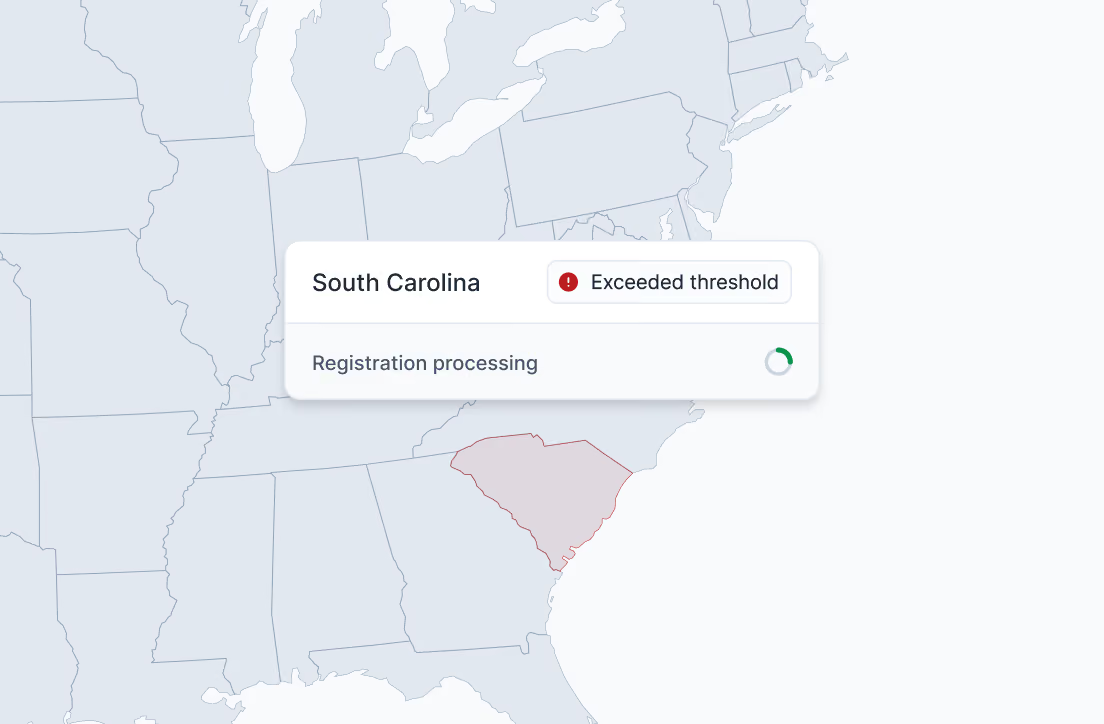
South Carolina treats an out-of-state seller as having physical nexus when it is affiliated with an in-state entity that sells similar merchandise to South Carolina customers using common trade names, trademarks, or logos shared with the remote seller. Nexus also arises when an in-state affiliate is used by the remote seller to accept returns, take orders, perform customer service, or distribute advertising materials on the business's behalf.
The SCDOR's definition of "remote seller" expressly includes any related entity that assists in sales, storage, distribution, or payment collection on a remote seller's behalf. Affiliate structures designed to technically avoid nexus through these arrangements fall within this broad reading.
Under S.C. Code Ann. § 12-36-80, a retailer is considered to maintain a place of business in South Carolina, directly or through a subsidiary, when it has any office, distribution house, sales house, warehouse, or other place of business, whether permanent or temporary. Physical nexus also arises from any agent, independent contractor, or representative operating in South Carolina under the retailer's authority; from inventory stored in the state; and from soliciting orders via representatives, catalogs, a website, or any other means that result in orders for in-state delivery.
Two statutory carve-outs limit the scope of physical nexus. Under the distribution facility exclusion, merely owning or utilizing a distribution facility in South Carolina does not by itself establish physical presence. An extended version of this exclusion under § 12-36-2691 expired on January 1, 2016; only the basic § 12-36-2690 exclusion remains in effect. Under the commercial printer exception, contracting with a South Carolina commercial printer does not create a place of business or require retailer registration.
Effective April 26, 2019, under Act No. 21 of 2019, marketplace facilitators are treated as the legal retailer for all sales made through their platform. The same $100,000 gross revenue threshold applies to facilitators.
South Carolina has not published a formal trailing nexus policy specifying a defined duration after physical presence is removed. The SCDOR Chapter 13 Nexus guidance states that physical nexus is effective the date it is established but does not address any trailing period following the removal of physical presence.
Lorem ipsum dolor sit amet, consectetur adipiscing elit. Suspendisse varius enim in eros elementum tristique. Duis cursus, mi quis viverra ornare, eros dolor interdum nulla, ut commodo diam libero vitae erat. Aenean faucibus nibh et justo cursus id rutrum lorem imperdiet. Nunc ut sem vitae risus tristique posuere.

