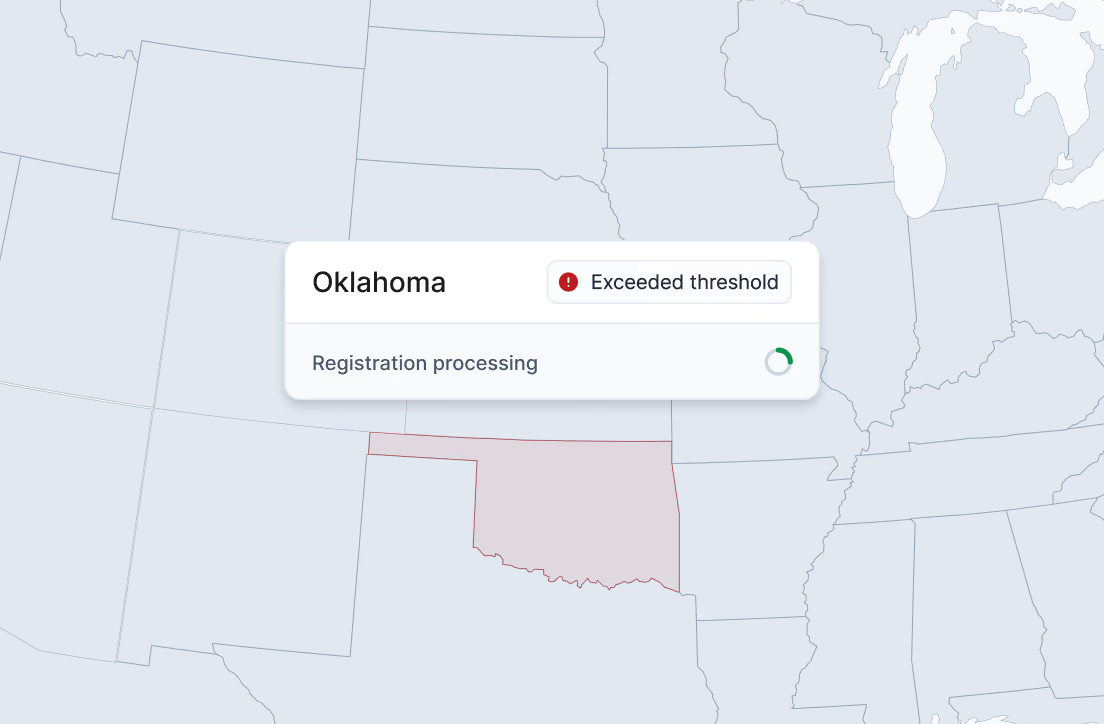
Oklahoma's economic nexus threshold is $100,000 in sales. Get a free nexus study. All 50 states covered.
Oklahoma establishes affiliate nexus through a presumption built into its definition of maintaining a place of business in the state. Under 68 O.S. Section 1352, a remote seller is presumed to have nexus when a related in-state entity holds more than 5% ownership interest in the seller. The presumption is triggered when the in-state affiliate sells a similar line of products under the same or a substantially similar business name, delivers or installs the seller's products for Oklahoma customers, allows customers to pick up orders at the affiliate's location, or conducts activities that are significantly associated with the seller's ability to establish or maintain an Oklahoma market. This presumption is rebuttable.
Oklahoma imposes sales tax collection obligations on any seller that maintains a place of business in the state. The statute defines maintaining a place of business broadly to include having an office, warehouse, distribution center, or other physical location in Oklahoma. Employees or agents conducting business activity in the state, whether on a permanent or temporary basis, also constitute physical presence sufficient to create nexus. Inventory stored at a third-party fulfillment center where the seller retains control over inventory movement triggers nexus as well. Standard Amazon FBA arrangements where the seller has no control over inventory placement or movement are treated under remote seller status and are subject only to economic nexus rules.
Oklahoma does not have a formal standalone trailing nexus statute, but the calendar-year lookback period creates a built-in trailing obligation. Because the evaluation period covers both the current and the preceding calendar year, a seller that crossed $100,000 in taxable sales in Year 1 remains obligated to collect and remit throughout all of Year 2, regardless of whether Year 2 sales approach the threshold. The obligation runs through the end of the calendar year in which nexus was established.
Lorem ipsum dolor sit amet, consectetur adipiscing elit. Suspendisse varius enim in eros elementum tristique. Duis cursus, mi quis viverra ornare, eros dolor interdum nulla, ut commodo diam libero vitae erat. Aenean faucibus nibh et justo cursus id rutrum lorem imperdiet. Nunc ut sem vitae risus tristique posuere.

