North Carolina's economic nexus threshold is $100,000 in sales. Get a free nexus study. All 50 states covered.
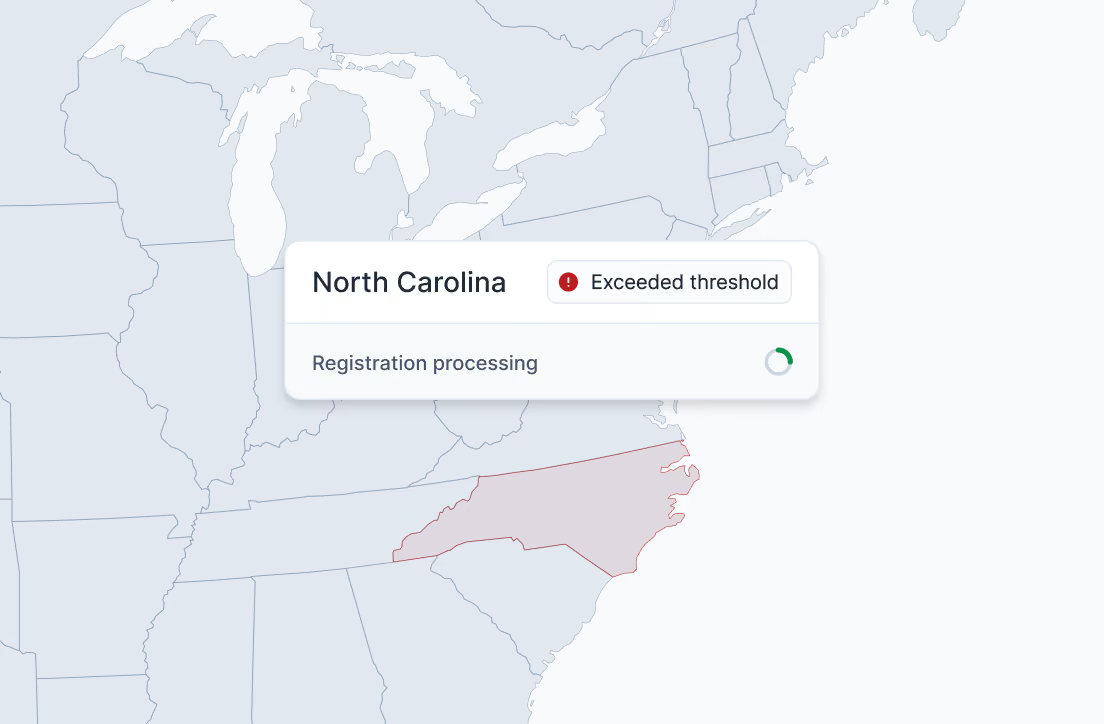
Affiliate nexus in North Carolina is incorporated directly into the physical nexus statute rather than existing as a standalone provision. Under G.S. § 105-164.8(a), a seller that operates in North Carolina "directly or through a subsidiary, affiliate, or agent" is considered engaged in business in the state. No separate affiliation threshold or ownership percentage test applies — the relationship itself, regardless of degree, is sufficient to establish nexus through the affiliated entity's in-state presence.
North Carolina also maintains click-through nexus, enacted August 7, 2009 and codified at G.S. § 105-164.8(b). A rebuttable presumption of nexus arises when a North Carolina resident refers customers to a remote seller under a commission-based referral arrangement and the cumulative gross receipts from all such North Carolina referral agreements exceed $10,000 in the preceding four quarterly periods. The $10,000 threshold is measured in the aggregate across all North Carolina referral partners, not per individual referral partner. The presumption may be rebutted by demonstrating that the North Carolina resident engaged only in passive activity with no market-maintenance function on the seller's behalf.
North Carolina defines physical nexus through a broad engaged-in-business standard codified at G.S. § 105-164.8(a). A seller is considered engaged in business in the state when it maintains any office, warehouse, distribution center, or any other place of business in North Carolina, whether permanent or temporary. The presence of representatives, agents, sales representatives, or solicitors in the state independently establishes nexus, as does holding tangible personal property for lease or rental within North Carolina.
Two additional triggers apply beyond traditional presence tests. Holding a wine shipper permit issued by the North Carolina ABC Commission constitutes engaged-in-business status. Attendance at even a single event in North Carolina for the purpose of making retail sales also creates nexus, meaning one trade show, pop-up, or fair is sufficient.
North Carolina further recognizes media exploitation nexus: a seller that purposefully or systematically exploits the North Carolina market through any media channel, including direct mail, catalogs, television, radio, the internet, or computer-assisted shopping, is considered engaged in business in the state. One express carve-out applies: a non-resident retailer that merely purchases advertising in North Carolina is not considered engaged in business based solely on that ad purchase.
North Carolina has no formally published trailing nexus policy. No statute or NCDOR guidance specifies the period for which collection and remittance obligations persist after nexus is lost. Collection and remittance obligations under G.S. § 105-164.8 continue through the date a registration is officially cancelled via Form NC-BN or through the SST registration system.
Lorem ipsum dolor sit amet, consectetur adipiscing elit. Suspendisse varius enim in eros elementum tristique. Duis cursus, mi quis viverra ornare, eros dolor interdum nulla, ut commodo diam libero vitae erat. Aenean faucibus nibh et justo cursus id rutrum lorem imperdiet. Nunc ut sem vitae risus tristique posuere.

