Michigan's economic nexus threshold is $100,000 in sales or 200 transactions. Get a free nexus study. All 50 states covered.
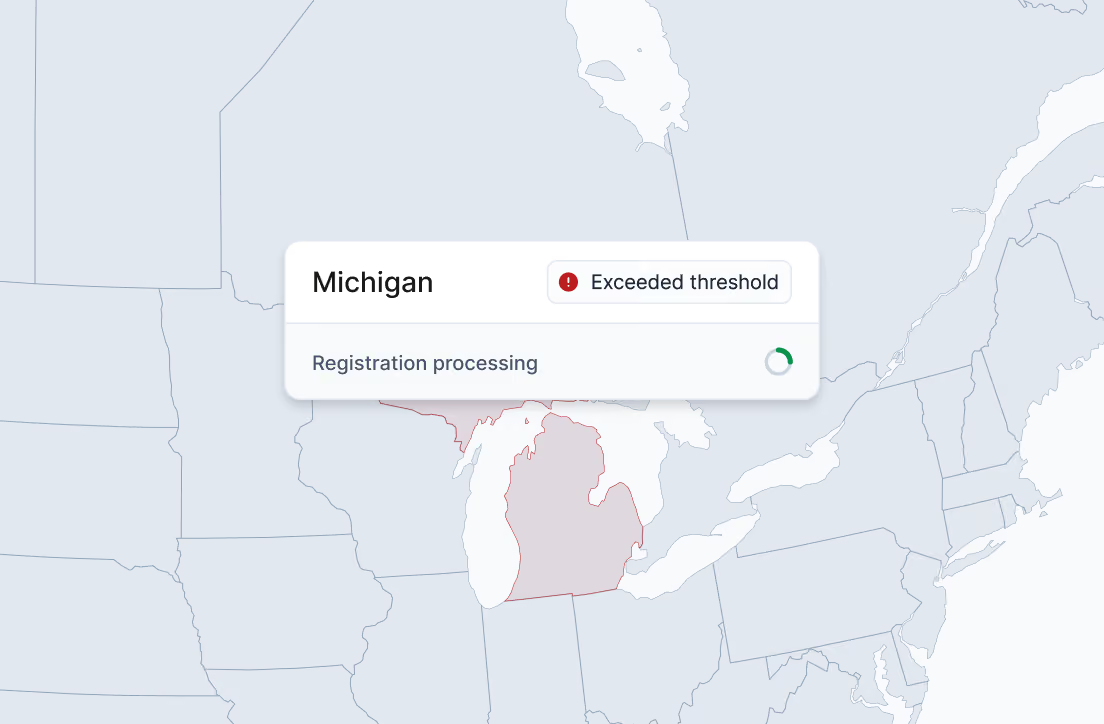
Michigan establishes two distinct bases for affiliate and click-through nexus under MCL 205.52b (GSTA) and MCL 205.95a (UTA), operating as a rebuttable presumption in each case.
The first basis is click-through nexus. A rebuttable presumption of nexus arises when Michigan residents refer customers to the remote seller via links or codes in exchange for a commission, the referrals generated more than $10,000 in gross receipts in the preceding 12 months, and the seller's total Michigan gross receipts exceeded $50,000 in the same period. The presumption can be rebutted by contractually prohibiting Michigan residents from soliciting customers on the seller's behalf and obtaining a signed annual certification of no solicitation from each such resident.
The second basis is brand and entity affiliation. A rebuttable presumption also arises when a remote seller operates under a name substantially similar to a Michigan-based entity, or shares employees, management, or facilities with a Michigan-based entity. This affiliation-based presumption is generally not rebuttable.
Michigan imposes a sales and use tax collection obligation on any business with a physical presence in the state. Under MCL 205.52b and RAB 2021-21, presence for as few as 2 or more days per year is sufficient to establish nexus when it involves employees, owners, salespeople, technicians, delivery drivers, or installers operating in Michigan.
Owning, renting, or leasing real property in Michigan creates nexus regardless of duration. This includes offices, warehouses, stores, and showrooms. Owning or using tangible personal property in the state, including inventory, fixtures, or equipment, likewise establishes presence. Inventory stored in a Michigan fulfillment center, including Amazon FBA warehouses, constitutes taxable presence.
Third-party representatives, agents, and independent contractors create nexus when they operate in Michigan on a regular and systematic basis, a standard that can be met with as few as 2 days per year. Delivery trucks or vehicles affiliated with the business that regularly operate in Michigan independently trigger nexus.
A trade show safe harbor applies when attendance is fewer than 10 days and no orders are accepted or contracts executed at the event. Attending for 10 or more days, or taking orders at the booth, eliminates the safe harbor.
Michigan applies two distinct trailing nexus rules depending on how nexus was originally established, as set out in RAB 2021-21.
For physical nexus and click-through nexus, the collection obligation continues through the remainder of the month of the last nexus-creating contact plus the following 11 calendar months. Each new nexus-creating activity resets this rolling period.
For economic nexus, the obligation persists until a complete calendar year (January 1 through December 31) passes in which the business fails to meet either the $100,000 sales threshold or the 200-transaction threshold. A business that exceeded the threshold in one year but fell below in the following year remains obligated through the entirety of the second year; the obligation ends on January 1 of the third year only if the business also stayed below both thresholds throughout the second year.
Lorem ipsum dolor sit amet, consectetur adipiscing elit. Suspendisse varius enim in eros elementum tristique. Duis cursus, mi quis viverra ornare, eros dolor interdum nulla, ut commodo diam libero vitae erat. Aenean faucibus nibh et justo cursus id rutrum lorem imperdiet. Nunc ut sem vitae risus tristique posuere.

