Massachusetts's economic nexus threshold is $100,000 in sales. Get a free nexus study. All 50 states covered.
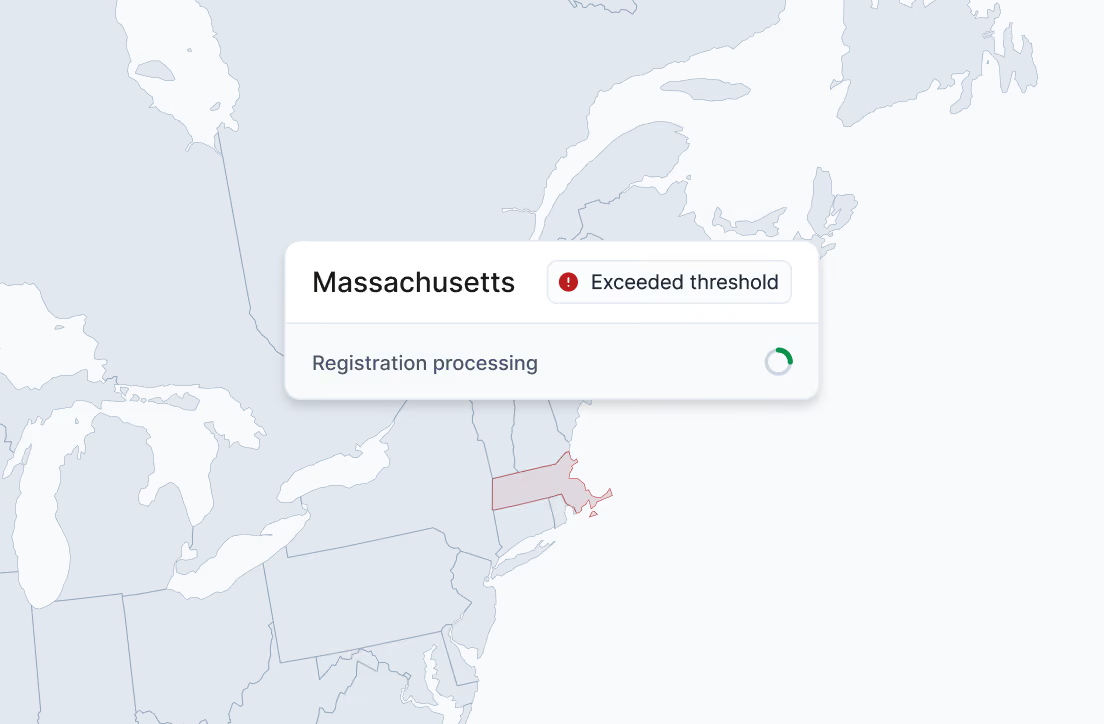
Massachusetts affiliate nexus is activity-based rather than purely ownership-based. Under G.L. c. 64H, § 1, a "vendor engaged in business in the commonwealth" includes any seller operating through a subsidiary, affiliate, or related entity that performs activities significantly associated with establishing or maintaining the seller's Massachusetts market. Legal separateness between the in-state entity and the out-of-state seller does not defeat the nexus analysis when the in-state entity's activities are economically integrated with the remote seller's Massachusetts operations.
Independent contractors who regularly solicit orders for an out-of-state seller in Massachusetts also create nexus for that seller. A safe harbor applies to solicitation conducted exclusively through direct mail or broadcast advertising — newspaper, radio, and television advertising does not create representative nexus.
Any physical presence in Massachusetts creates immediate nexus under G.L. c. 64H, § 1. Nexus-creating contacts include maintaining an office, store, or fixed place of business in the state; employing workers who reside or work in Massachusetts, including remote workers; storing inventory in Massachusetts warehouses, including Amazon FBA fulfillment centers and third-party logistics providers; deploying representatives, agents, or independent contractors who regularly solicit in-state; holding a lease or ownership interest in Massachusetts real property, including subleases; and making regular deliveries into the state by means other than common carrier or the United States Postal Service.
Under Directive 91-3, attending Massachusetts trade shows for three or fewer calendar days per year does not create nexus. Attendance exceeding three days makes the seller "engaged in business in the Commonwealth" for the entire calendar year, requiring collection on all Massachusetts sales for that year — including remote and mail-order sales made while the seller was not physically present in the state.
Massachusetts applies a continuing nexus presumption: a seller that had nexus in any calendar year is presumed to continue having nexus in the following year. That presumption is rebuttable — the seller must affirmatively demonstrate that all nexus-creating contacts have ceased and that there are no plans to resume them. For economic nexus specifically, exceeding $100,000 in Year 1 triggers a Year 2 collection obligation; that obligation continues until the threshold is unmet in both the prior and current calendar years.
Lorem ipsum dolor sit amet, consectetur adipiscing elit. Suspendisse varius enim in eros elementum tristique. Duis cursus, mi quis viverra ornare, eros dolor interdum nulla, ut commodo diam libero vitae erat. Aenean faucibus nibh et justo cursus id rutrum lorem imperdiet. Nunc ut sem vitae risus tristique posuere.

