Maine's economic nexus threshold is $100,000 in sales. Get a free nexus study. All 50 states covered.
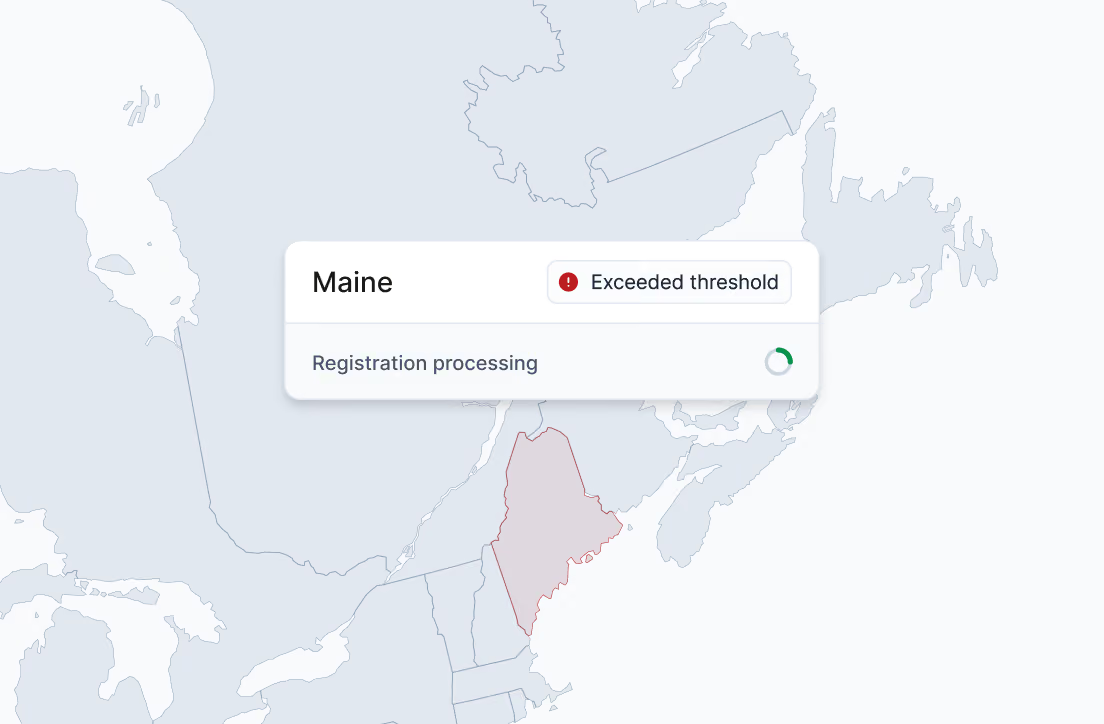
Maine's affiliate nexus provision was fully repealed effective January 1, 2022 by PL 2021, c. 181. The prior rebuttable presumption of nexus based on affiliate or agent relationships no longer applies. As of January 1, 2022, Maine nexus is determined solely by physical presence or economic activity.
Physical nexus in Maine is established under 36 M.R.S.A. § 1754-B and Maine Revenue Services Instructional Bulletin No. 43. A business with any office, manufacturing facility, distribution facility, warehouse, storage facility, or sales or sample room in Maine has physical nexus. The presence of employees or salespeople soliciting orders within Maine also creates nexus, as does storing inventory or tangible personal property physically in Maine, including property leased or rented to Maine customers. Operating company-owned delivery vehicles in Maine and using third-party carriers other than interstate common carriers for in-state deliveries are additional triggers. Safe harbors that do not create physical nexus include attending trade shows in Maine, maintaining a Maine bank account, and using Maine-based printing vendors.
Maine achieves functionally equivalent trailing nexus through its registration cancellation policy. A registered remote seller or marketplace facilitator may only cancel its sales tax registration once gross sales have not exceeded $100,000 for two consecutive calendar years following initial registration. A business that exceeded the threshold in Year 1 and drops below it in Years 2 and 3 is not eligible to deregister until the start of Year 4.
Lorem ipsum dolor sit amet, consectetur adipiscing elit. Suspendisse varius enim in eros elementum tristique. Duis cursus, mi quis viverra ornare, eros dolor interdum nulla, ut commodo diam libero vitae erat. Aenean faucibus nibh et justo cursus id rutrum lorem imperdiet. Nunc ut sem vitae risus tristique posuere.

