Indiana's economic nexus threshold is $100,000 in sales. Get a free nexus study. All 50 states covered.
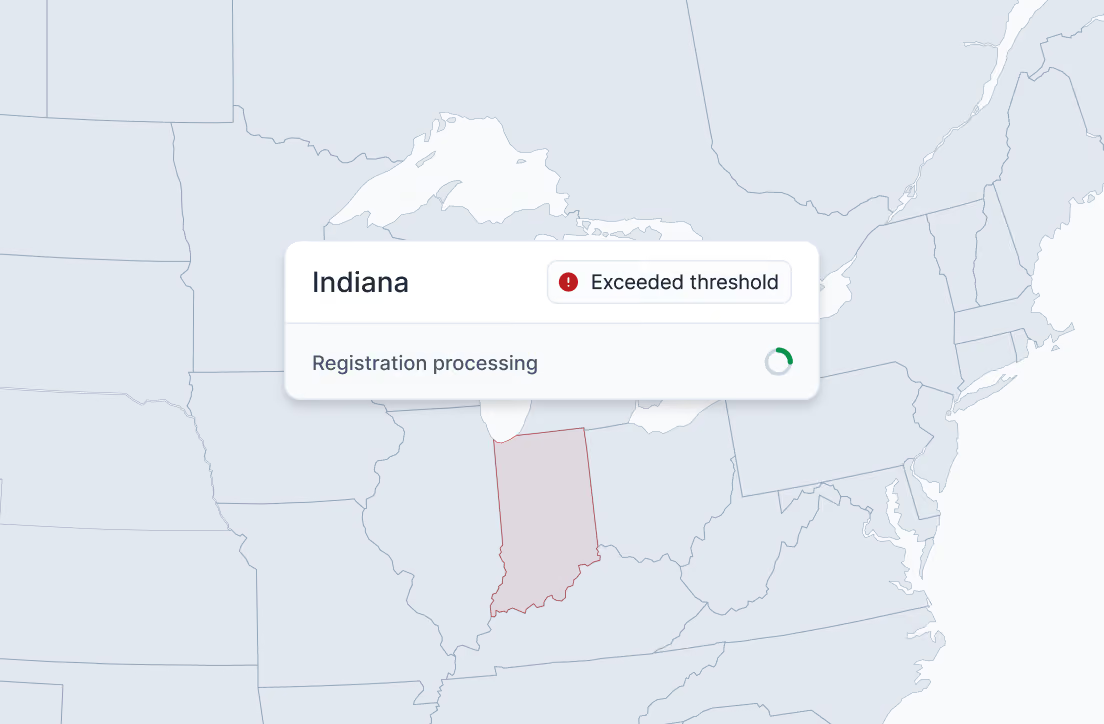
Indiana codifies affiliate nexus in IC 6-2.5-2-1, which establishes two separate presumption frameworks — one for affiliated entities and one for click-through referrals — each rebuttable.
Under the affiliate presumption, nexus is presumed when an in-state affiliate defined under IRC § 1563(a) maintains substantial Indiana nexus and the out-of-state retailer meets at least one of the following conditions: it sells a similar line of products under the same or similar business name as the affiliate; it uses the affiliate's Indiana facilities to promote its own sales; or it shares trademarks or service marks with the affiliate.
Indiana also recognizes click-through nexus when Indiana residents refer customers to an out-of-state retailer through website links and the cumulative gross receipts from those referrals exceed $10,000 in the preceding 12 months. This presumption is also rebuttable.
Physical nexus in Indiana arises under IC 6-2.5-3-1 and 45 IAC 2.2-3-3. Maintaining any office, research facility, distribution center, warehouse, or sales or sample location in Indiana — whether on a permanent or temporary basis — establishes nexus. The presence of a representative, agent, salesperson, canvasser, or solicitor in Indiana who sells, delivers, installs, repairs, assembles, sets up, accepts returns, bills, invoices, or takes orders also creates nexus. Delivering goods into Indiana via the seller's own vehicles where title and possession transfer in Indiana is an additional trigger.
Certain activities do not create nexus under Indiana law. Deliveries made via common carrier or parcel post do not establish a taxable presence. Property held at a commercial printer in Indiana is subject to an explicit statutory exclusion. Being merely qualified to do business in Indiana, or conducting credit investigations, likewise does not create nexus.
Indiana has no formally published statute or guidance specifically addressing trailing nexus. The calendar-year evaluation period established under the economic nexus framework creates an inherent trailing obligation: exceeding $100,000 in gross revenue during Year 1 results in nexus for the entirety of Year 2, even if Year 2 sales fall below the threshold mid-year.
Lorem ipsum dolor sit amet, consectetur adipiscing elit. Suspendisse varius enim in eros elementum tristique. Duis cursus, mi quis viverra ornare, eros dolor interdum nulla, ut commodo diam libero vitae erat. Aenean faucibus nibh et justo cursus id rutrum lorem imperdiet. Nunc ut sem vitae risus tristique posuere.

