California's economic nexus threshold is $500,000 in sales. Get a free nexus study. All 50 states covered.
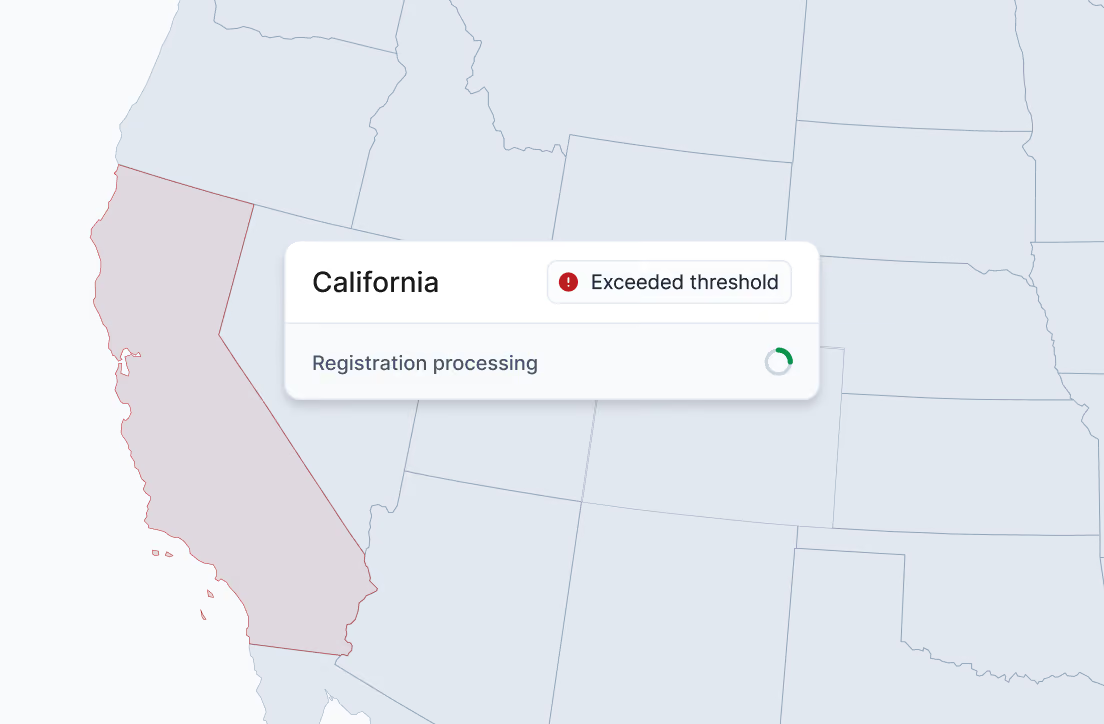
California's standalone affiliate nexus and click-through nexus provisions under RTC §6203(c)(4)-(c)(5) were repealed effective April 1, 2019, by Assembly Bill 147. No independent affiliate nexus statute is currently in effect in California.
However, the related-persons aggregation rule under the $500,000 threshold remains operative. Sales made by related persons as defined under IRC §267(b) — including parent/subsidiary relationships and brother-sister corporations with 50% or more common ownership — must be combined when calculating whether the threshold is met. Corporate group structures cannot be used to disaggregate sales and remain below the $500,000 level.
AB 147 also includes a contingency clause: if a court determines that the $500,000 standard violates the Commerce Clause, the prior click-through and affiliate nexus provisions automatically reactivate.
A retailer is "engaged in business" in California, and therefore subject to sales and use tax collection obligations, under RTC §6203(c)(1)-(c)(3) if it maintains any of the following in the state: an office, place of distribution, sales or sample room, warehouse, storage place, or other place of business; any representative, agent, salesperson, independent contractor, or solicitor operating in California; leased equipment, including a computer server, located in California; or tangible or real property owned or leased in the state.
Temporary employee visits for sales calls, training, or technical support can create nexus under this standard. A telecommuting employee working from a personal home that is not held out as a business location and involves no customer contact generally does not create nexus under California's published guidance.
California applies a "unity of entity" principle: if any division of a legal entity has physical nexus in California, the entire legal entity is subject to the collection obligation.
A limited convention and trade show safe harbor applies when a business's sole California presence consists of attending conventions or trade shows: the business must participate no more than 15 days in any 12-month period and must have earned less than $100,000 in net income from California activities in the prior calendar year.
California has a formal, codified trailing nexus rule under Regulation 1684 and Regulation 1827. A business that had nexus in a given calendar year — whether through physical presence or by meeting the $500,000 economic nexus threshold — must continue collecting and remitting California use tax through December 31 of the following year, even if all nexus-creating activities ceased on January 1 of that following year.
Lorem ipsum dolor sit amet, consectetur adipiscing elit. Suspendisse varius enim in eros elementum tristique. Duis cursus, mi quis viverra ornare, eros dolor interdum nulla, ut commodo diam libero vitae erat. Aenean faucibus nibh et justo cursus id rutrum lorem imperdiet. Nunc ut sem vitae risus tristique posuere.

